Shifting Retail Paradigms: Integrating Analytics Insights into Protected Application Environments
Written by Otto Walter · Jul 29, 2026
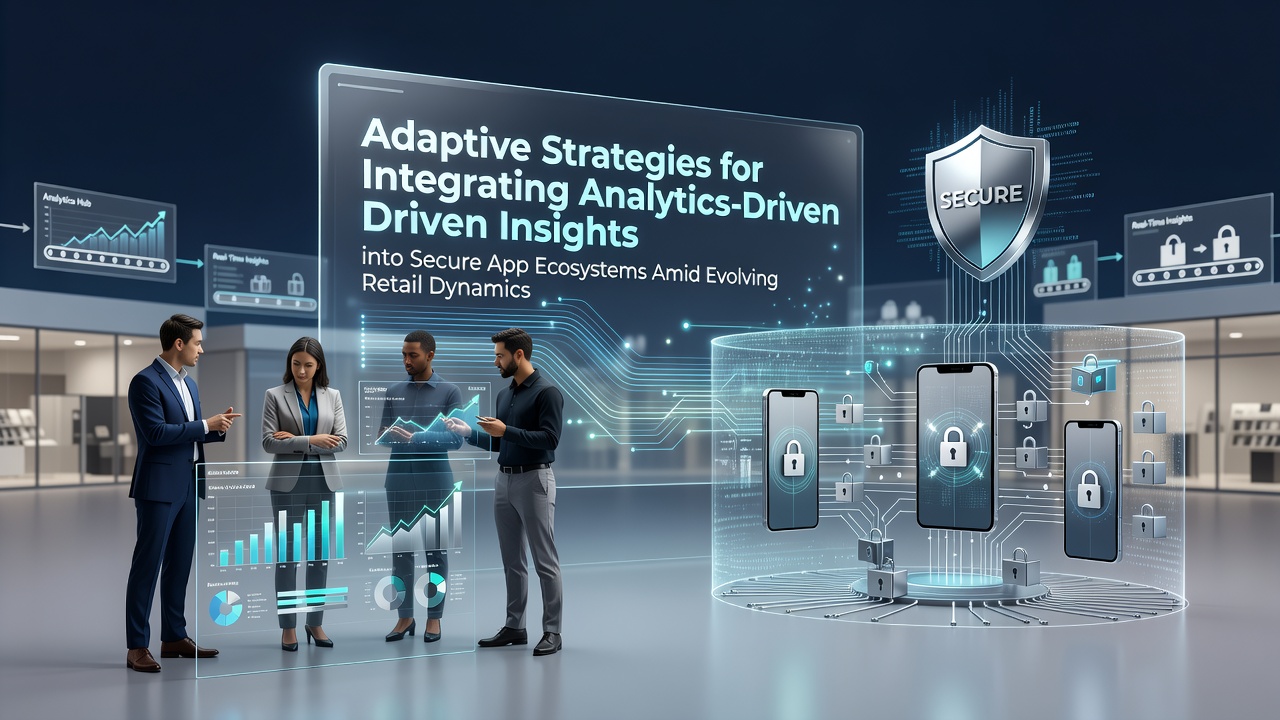
Shifting Retail Paradigms: Integrating Analytics Insights into Protected Application Environments
Retail operations have undergone measurable transformations by July 2026, with mobile transaction volumes rising across multiple regions according to aggregated industry reports, which creates pressure on application developers to embed analytics directly into security architectures rather than treating the two as separate layers. Data from transaction logs and user behavior streams now feed into real-time decision engines that adjust access controls, encryption parameters, and anomaly detection thresholds while applications remain in active use. Observers note that organizations which synchronize these data flows report fewer breach incidents per million sessions compared with those maintaining siloed systems, because patterns detected in one domain immediately influence protective measures in the other.
Core Components of Analytics-Driven Security Integration
Secure app ecosystems in retail rely on continuous ingestion of metrics such as session duration, payment velocity, device fingerprint variations, and geolocation shifts, all processed through machine learning models that update risk scores every few seconds. These models trigger automated responses including step-up authentication, temporary transaction throttling, or container isolation when thresholds are crossed. Researchers have documented that such closed-loop systems reduce false positives in fraud alerts by measurable percentages, freeing security teams to focus on novel threat vectors instead of routine reviews. Integration points typically occur at the API gateway level, where analytics pipelines and security policy engines share common data schemas, and at the edge computing nodes that handle localized retail traffic spikes during promotional events.
Implementation Patterns Observed in Distributed Retail Networks
Development teams commonly adopt microservices architectures that isolate analytics processing from core transaction logic, allowing independent scaling during peak periods such as seasonal sales surges. Container orchestration platforms enforce security policies derived from analytics outputs, applying network segmentation rules that adapt based on detected behavioral clusters. One documented case involved a multinational retailer that linked its customer loyalty database directly to its threat intelligence module, enabling the system to flag accounts exhibiting both high-value purchase patterns and unusual login sequences within the same operational cycle. Such linkages require standardized data formats and role-based access controls to prevent unauthorized exposure of sensitive customer attributes while still permitting model training on aggregated datasets.
Addressing Evolving Retail Dynamics Through Adaptive Mechanisms
Consumer channel preferences continue to migrate toward voice-assisted and augmented-reality interfaces, which introduce new telemetry streams that must be incorporated into existing security frameworks without disrupting legacy payment pathways. Adaptive strategies therefore emphasize modular plugin architectures where new data collectors can be deployed alongside existing ones, each feeding a unified analytics bus that security controls query in real time. Evidence from deployment logs shows that retailers maintaining version-controlled policy templates experience faster rollout times for these additions, because changes propagate through automated testing suites before reaching production endpoints. July 2026 figures from several retail consortia indicate that organizations practicing this modular approach maintained compliance with updated data residency regulations across multiple jurisdictions while expanding feature sets.

Resource allocation between development cycles and protection measures follows patterns visible in project management dashboards, where teams allocate development hours proportionally to analytics-identified risk surfaces rather than applying uniform security overlays. This targeted distribution appears in case studies where interface refinements for emerging markets receive lighter security audits if analytics flag low fraud exposure, whereas high-velocity checkout flows receive heavier instrumentation. Canadian retail data aggregated by Statistics Canada illustrates how such differentiated approaches correlate with sustained growth in cross-border mobile sales without proportional increases in incident response costs.
Measurement Frameworks and Continuous Refinement
Performance benchmarking for these integrated systems incorporates metrics spanning both domains: mean time to detect anomalies, model retraining frequency, policy update latency, and end-user conversion rates under varying security postures. Dashboards aggregate these indicators into composite scores that guide quarterly roadmap adjustments. Academic analyses from European research consortia have examined how feedback loops between analytics outputs and security configurations influence long-term platform stability, finding that shorter iteration cycles correlate with lower drift between expected and actual risk profiles. Organizations that publish internal benchmarks to industry working groups contribute to collective understanding of effective thresholds, although proprietary variations remain common due to differing threat landscapes across product categories.
Future Trajectory Indicators
Emerging standards from bodies such as the National Institute of Standards and Technology continue to shape how analytics outputs map onto control families, particularly in areas of supply chain visibility and third-party data handling for retail platforms. Developers monitor these updates to ensure their integration layers remain aligned with recommended practices while accommodating region-specific retail regulations that evolve independently. The result is a layered ecosystem where analytics serve as the connective tissue between dynamic market signals and static security requirements, enabling applications to respond to shifts without requiring full architectural overhauls.
Conclusion
Retail application environments that successfully merge analytics-driven insights with security protocols demonstrate measurable resilience against both technical threats and market fluctuations. Integration occurs through shared data pipelines, adaptive policy engines, and modular deployment patterns that accommodate new interface types and regulatory demands. Continued refinement depends on consistent measurement of cross-domain performance indicators and alignment with evolving technical standards, ensuring that protective measures scale in tandem with commercial expansion rather than constraining it.