Shifting Buyer Patterns Direct Resources Between Interface Tweaks and Security Boosts in Digital Retail
Written by Clara Powell · Jun 17, 2026
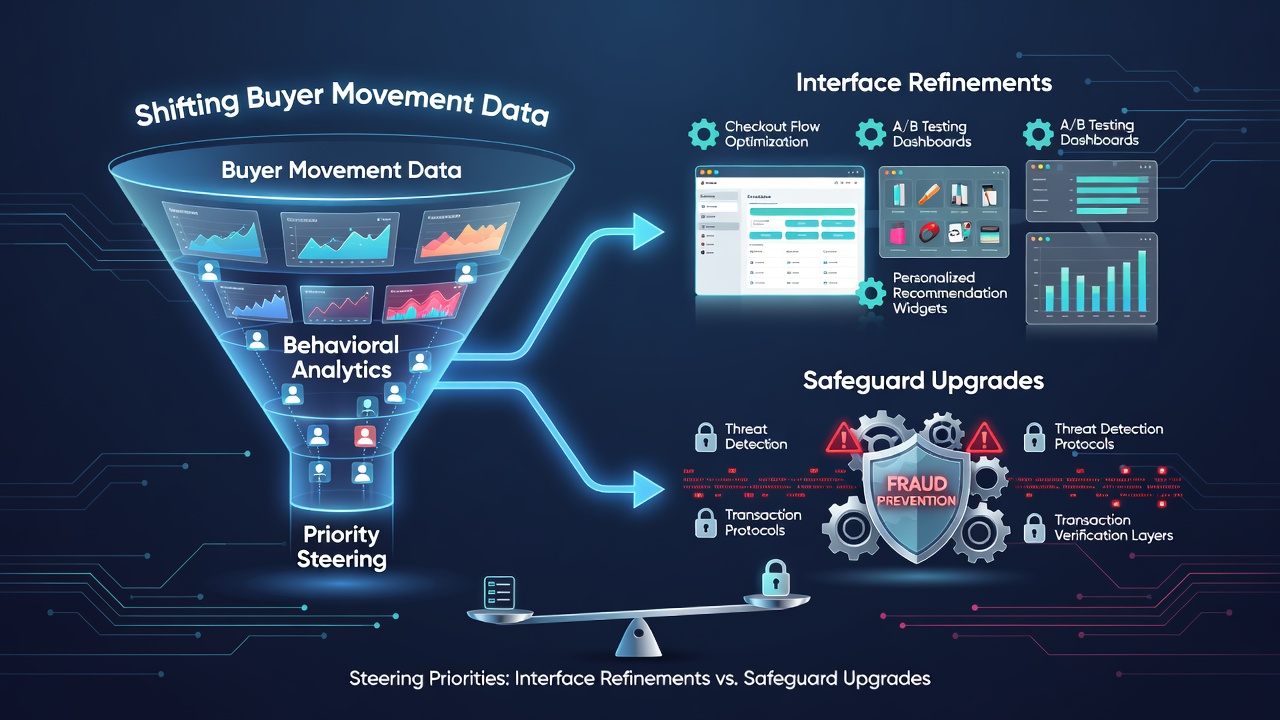
Shifting Buyer Patterns Direct Resources Between Interface Tweaks and Security Boosts in Digital Retail
Buyer movement data tracks how customers navigate online stores, from product page clicks to checkout paths and session durations, and this information increasingly shapes whether retail networks allocate budgets toward smoother interfaces or stronger security layers. Data collected across multiple platforms in June 2026 revealed that abrupt changes in navigation habits, such as longer dwell times on payment screens, prompted several major retailers to reroute development funds from visual redesigns to encryption upgrades within the same quarter.
Buyer Movement Data as a Decision Driver
Retail networks gather movement data through heat maps, clickstream logs, and session recordings that show where users hesitate or abandon carts, and these patterns provide concrete signals for priority shifts. When exit rates spike at login pages during high-traffic periods, analysts often recommend reinforcing authentication protocols rather than adjusting button placements or color schemes. Studies from distributed commerce systems demonstrate that networks responding to such signals within weeks maintain higher conversion rates compared with those that delay action until quarterly reviews.
Interface Refinements Triggered by Navigation Shifts
Changes in how buyers scroll through mobile catalogs or filter search results can steer teams toward interface refinements when data shows repeated friction points in product discovery flows. Researchers tracking European retail platforms noted that a 15 percent rise in mobile zoom actions on image galleries led to immediate investments in responsive design elements during the first half of 2026. These adjustments focus on reducing load times and simplifying menu structures while security remains secondary unless movement data also flags unusual access attempts from new geographic clusters.
Safeguard Upgrades Prompted by Behavioral Red Flags
Buyer movement data also highlights potential threats when patterns deviate from established norms, such as sudden spikes in rapid page transitions that suggest automated scraping or credential testing. In these cases, safeguard upgrades take precedence because compromised sessions directly threaten transaction integrity and customer trust metrics. Figures from North American retail networks indicate that platforms which elevated fraud detection algorithms after detecting irregular checkout sequences reduced breach incidents by measurable margins in subsequent reporting periods.
Balancing the Two Priorities Through Data Thresholds
Many digital retail operations now establish threshold rules that compare interface-related metrics against security indicators before committing resources, and this approach avoids reactive swings that waste development cycles. For instance, when dwell time on support chat interfaces increases alongside login failures from unfamiliar devices, teams split allocations between chat flow improvements and multi-factor authentication rollouts. Observers note that Australian retail groups using similar frameworks reported more stable quarterly performance because decisions rested on combined datasets rather than isolated signals.
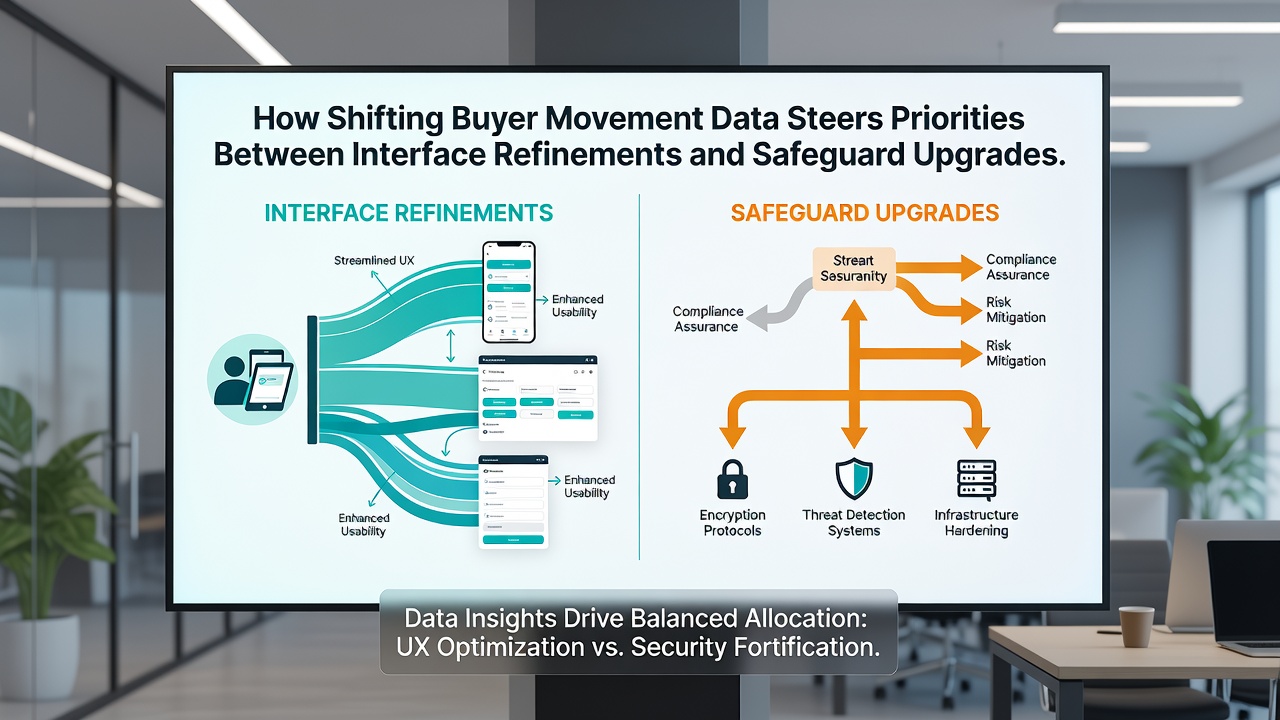
Regional Variations in Allocation Patterns
European networks tend to prioritize safeguard upgrades sooner when movement data crosses into regulated data-handling zones, whereas North American counterparts often extend interface testing periods before security pivots occur. Canadian retail analyses from early 2026 highlighted how cross-border traffic shifts influenced faster encryption deployments across shared supply platforms. These geographic differences arise because local compliance requirements interact with the same underlying buyer movement datasets in distinct ways.
Long-Term Effects on Network Architecture
Over multiple quarters, consistent buyer movement patterns encourage hybrid development roadmaps that embed both interface and security considerations into single update cycles. Data from cloud-based retail environments shows that networks adopting unified tracking dashboards reduced the time between identifying a navigation issue and implementing protective measures by integrating monitoring tools. This integration allows teams to respond when user paths suggest both usability gaps and vulnerability exposures simultaneously.
Conclusion
Buyer movement data continues to serve as the central mechanism that reallocates priorities between interface refinements and safeguard upgrades across digital retail networks, with decisions grounded in measurable session behaviors rather than fixed schedules. As platforms refine their tracking capabilities, the interplay between these two areas becomes more precise, allowing resources to flow where current patterns indicate the greatest operational impact.