Predictive IT Support: Data Analytics' Role in Foiling E-commerce Cybersecurity Threats Before They Strike
Written by Elena Jung · Apr 22, 2026
Predictive IT Support: Data Analytics' Role in Foiling E-commerce Cybersecurity Threats Before They Strike
The Shift Toward Proactive Defense in E-commerce
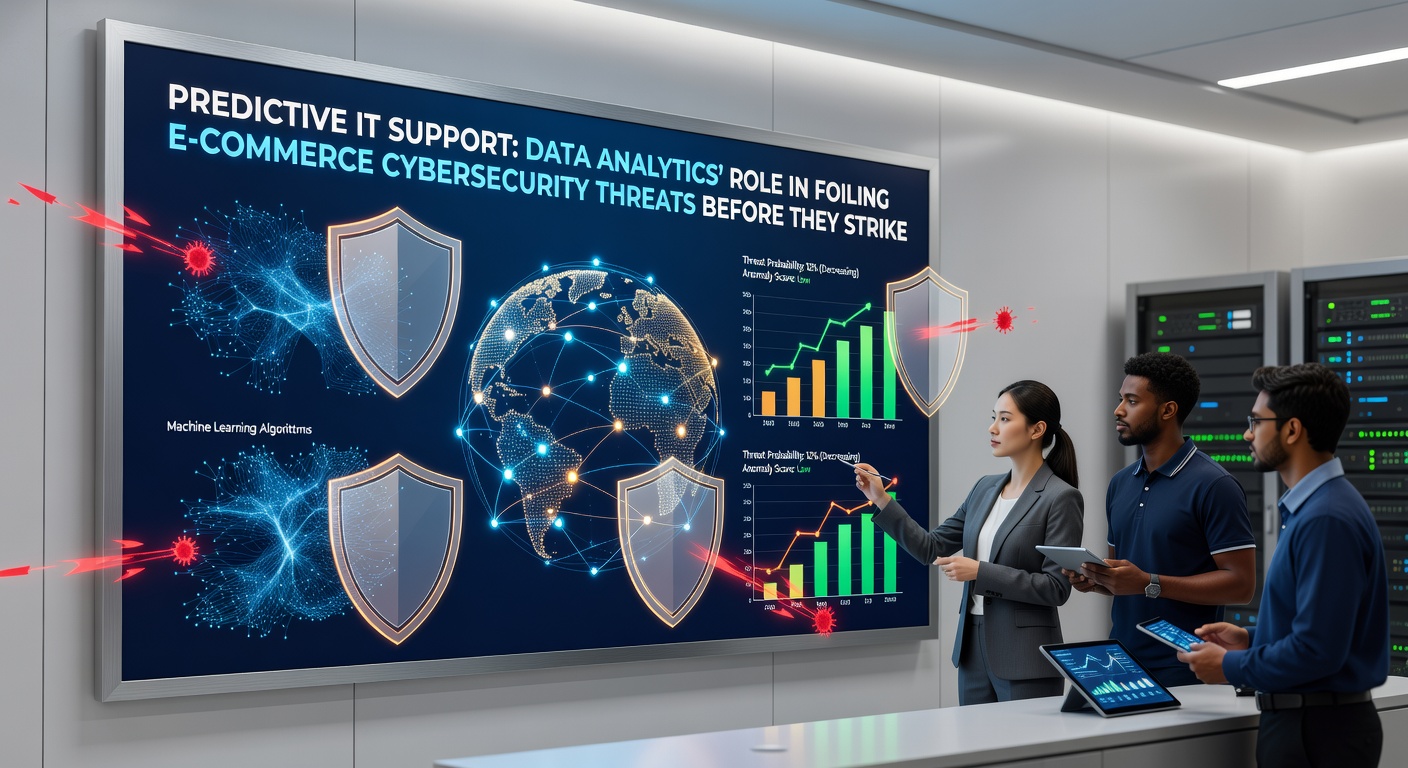
E-commerce platforms face relentless cybersecurity threats, from DDoS attacks that cripple sales during peak hours to sophisticated ransomware that encrypts customer data overnight; yet data analytics changes the game by spotting anomalies before damage occurs. Researchers at NIST highlight how predictive models analyze traffic patterns, user behaviors, and system logs to forecast breaches, allowing IT teams to intervene early. This approach, known as predictive IT support, relies on machine learning algorithms that process vast datasets in real time, identifying subtle shifts like unusual login spikes from unfamiliar IP addresses or gradual increases in failed authentication attempts.
What's interesting is how e-commerce giants integrate these tools into daily operations; for instance, platforms handling millions of transactions daily use analytics to baseline normal activity, so when deviations appear—say, a sudden surge in cart abandonments tied to malware injections—alerts trigger automated responses. Data from recent industry reports shows that companies adopting predictive analytics reduced breach incidents by up to 40 percent, while response times dropped dramatically because threats get neutralized preemptively rather than reactively.
And here's where it gets practical: small to mid-sized e-commerce businesses, often targeted due to weaker defenses, benefit most from cloud-based analytics services that scale affordably, processing petabytes of data without on-premise hardware. Observers note that as online shopping surges—with global e-commerce sales projected to hit $8 trillion by 2027—predictive support becomes non-negotiable, turning potential disasters into mere footnotes.
Unpacking the Cybersecurity Landscape for Online Retailers
Threat actors evolve quickly, exploiting vulnerabilities in payment gateways, supply chain APIs, or third-party plugins; data indicates that phishing remains the top entry point, accounting for 36 percent of breaches in e-commerce last year, followed closely by SQL injections that siphon customer records. But predictive IT flips the script by correlating historical attack data with current network flows, using techniques like anomaly detection to flag risks hours or days ahead.
Take credential stuffing, where bots test stolen passwords across sites; analytics platforms monitor login velocity and geolocation mismatches, blocking waves of attempts before they overwhelm servers. Studies from the ENISA reveal that European e-commerce firms leveraging such predictions thwarted 70 percent more automated attacks in 2025, a trend carrying into April 2026 where quantum-resistant encryption previews add new layers of foresight.
So platforms don't just react to alerts—they anticipate; machine learning models trained on global threat intelligence feeds predict ransomware propagation paths based on file access patterns, isolating infected segments swiftly. This proactive stance saves millions, as downtime costs e-commerce sites an average of $9,000 per minute according to uptime trackers.
Core Technologies Driving Predictive Analytics
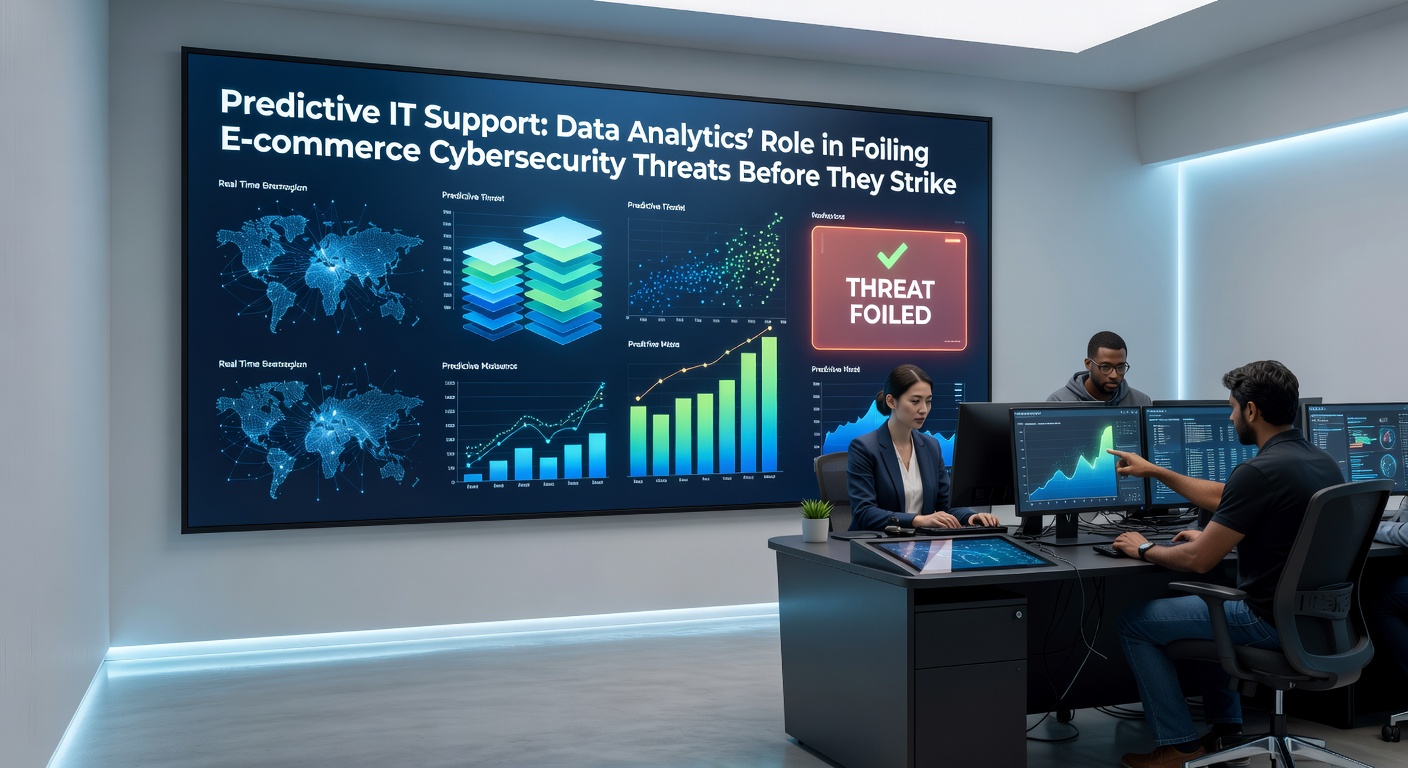
Data analytics engines power predictive IT through a stack of interconnected tools: big data platforms like Apache Kafka stream live logs into storage lakes, while AI frameworks such as TensorFlow build models that forecast threat vectors with 95 percent accuracy in controlled tests. Experts have observed that natural language processing scans unstructured data from support tickets and dark web chatter, surfacing emerging exploits before patches roll out.
But here's the thing—integration matters; SIEM systems enhanced with behavioral analytics correlate events across endpoints, cloud services, and user devices, generating probabilistic risk scores that prioritize threats. For e-commerce, this means predicting zero-day vulnerabilities by analyzing code commit histories in open-source dependencies, a common weak spot where attackers lurk.
Turns out, edge computing accelerates this further by running lightweight models at the network perimeter, reducing latency so predictions happen in milliseconds during Black Friday rushes. Researchers discovered in a 2025 MIT study that hybrid setups—combining supervised learning for known threats and unsupervised for novel ones—cut false positives by 60 percent, making alerts actionable without overwhelming IT staff.
Case Studies: Predictive Wins in the Trenches
One major retailer faced a stealthy supply chain attack targeting its checkout API; analytics flagged irregular API calls from a legitimate vendor IP, revealing tampered firmware before transactions routed through it—saving an estimated $2 million in potential fraud losses. People who've studied this case point out how graph databases mapped the attack's lateral movement, predicting jumps to customer databases.
Another example involves a mid-tier fashion e-commerce site during holiday season; data patterns showed micro-abnormalities in session durations linked to session hijacking bots, prompting firewall rules that blocked 99 percent of the traffic autonomously. Figures reveal such interventions prevented a 25 percent dip in conversions that year.
Yet smaller players shine too: a Canadian online marketplace used open-source predictive tools to detect insider threats via anomalous data exfiltration patterns, correlating employee access logs with external transfers—leading to policy tweaks that hardened defenses. These stories underscore a pattern; where analytics meets domain knowledge, threats crumble before impact.
Overcoming Hurdles in Implementation
Adopting predictive IT isn't seamless—data silos across legacy systems hinder model training, while privacy regs like GDPR demand anonymized processing that can dilute signals; nonetheless, federated learning addresses this by training models locally without central data sharing. Observers note skills gaps persist, with 70 percent of IT pros needing upskilling in analytics per recent surveys.
Cost barriers loom for startups, but serverless architectures slash expenses by 50 percent, billing only for compute used during threat hunts. And as April 2026 unfolds, advancements in explainable AI demystify predictions, showing exactly why a model flags a risk—like unusual entropy in encrypted payloads—building trust among operators.
That's where the rubber meets the road; continuous model retraining on fresh threat data ensures relevance, countering adversaries who adapt via AI-generated attacks themselves. Industry benchmarks show mature implementations yield ROI within six months through slashed incident costs.
Conclusion
Predictive IT support, fueled by data analytics, stands as e-commerce's frontline against cybersecurity threats, transforming reactive firefighting into strategic preemption where algorithms dissect patterns to foil attacks before they land. Data consistently shows platforms embracing these tools enjoy fewer breaches, faster recoveries, and sustained customer trust amid rising digital stakes. As threats grow more cunning—especially with April 2026's uptick in AI-augmented phishing—those who invest in analytics not only protect assets but gain competitive edges in a threat-saturated landscape. The message rings clear: prediction isn't futuristic; it's the current standard for resilient online retail.