Performance Benchmarking Approaches for Integrating Remote Computing Resources with Mobile Software Projects
Written by Casey Krüger · Jun 19, 2026
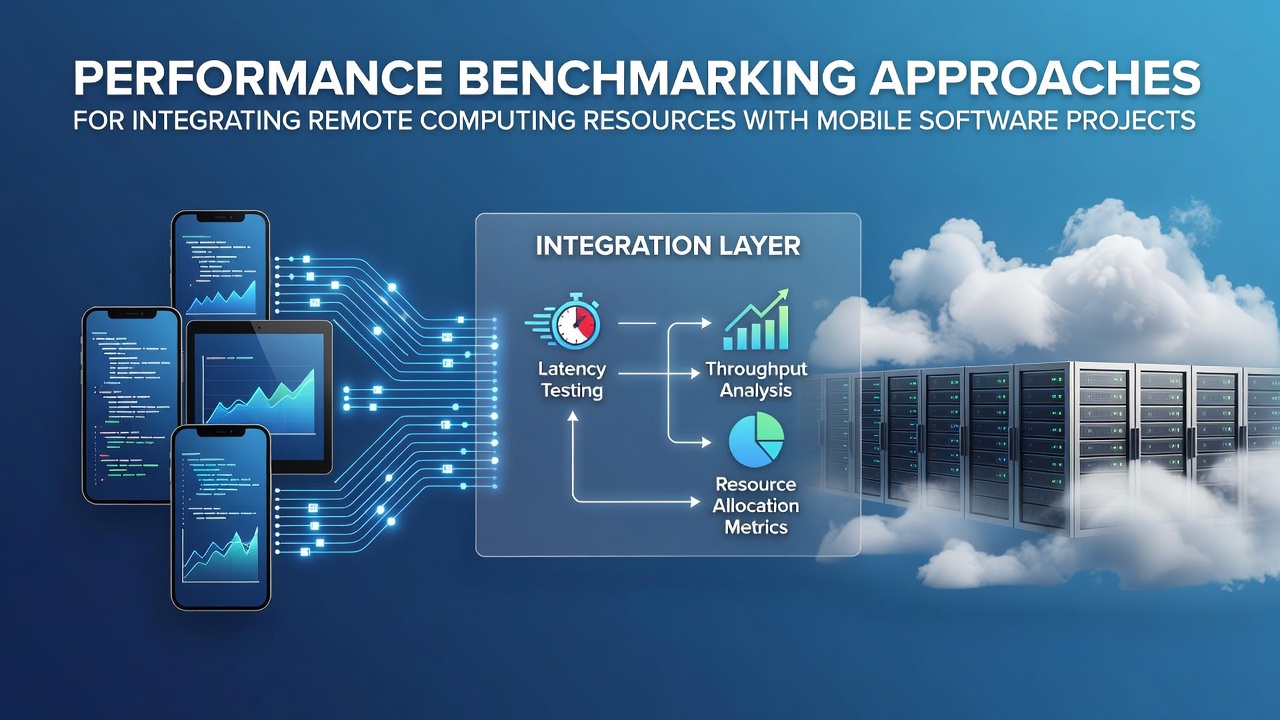
Performance Benchmarking Approaches for Integrating Remote Computing Resources with Mobile Software Projects
Performance benchmarking serves as a core practice when teams connect remote computing resources such as cloud servers and edge nodes to mobile software projects, and developers track metrics like latency, throughput, energy consumption, and response times to verify that integrations meet operational demands across varied network conditions. Data from industry reports indicate that mobile applications relying on remote resources experienced average latency reductions of 25 percent after structured benchmarking protocols were applied during the development cycle.
Core Benchmarking Frameworks
Teams adopt established frameworks to measure system behavior under load, and one approach involves synthetic workloads that simulate user interactions while measuring how remote compute offloading affects device battery life and processing speed. Another method uses real-world traffic traces collected from deployed applications, allowing analysts to replay scenarios and compare baseline mobile performance against configurations that leverage remote resources. Researchers at institutions across the European Union have documented how these dual approaches reveal bottlenecks that single-metric evaluations often miss.
Standardized tools such as Apache JMeter and custom scripts built on Android Profiler help quantify end-to-end delays when data moves between mobile clients and remote infrastructure. Observers note that combining these tools with network emulation software creates repeatable test environments where variables like bandwidth fluctuation and packet loss can be controlled precisely.
Key Metrics and Measurement Techniques
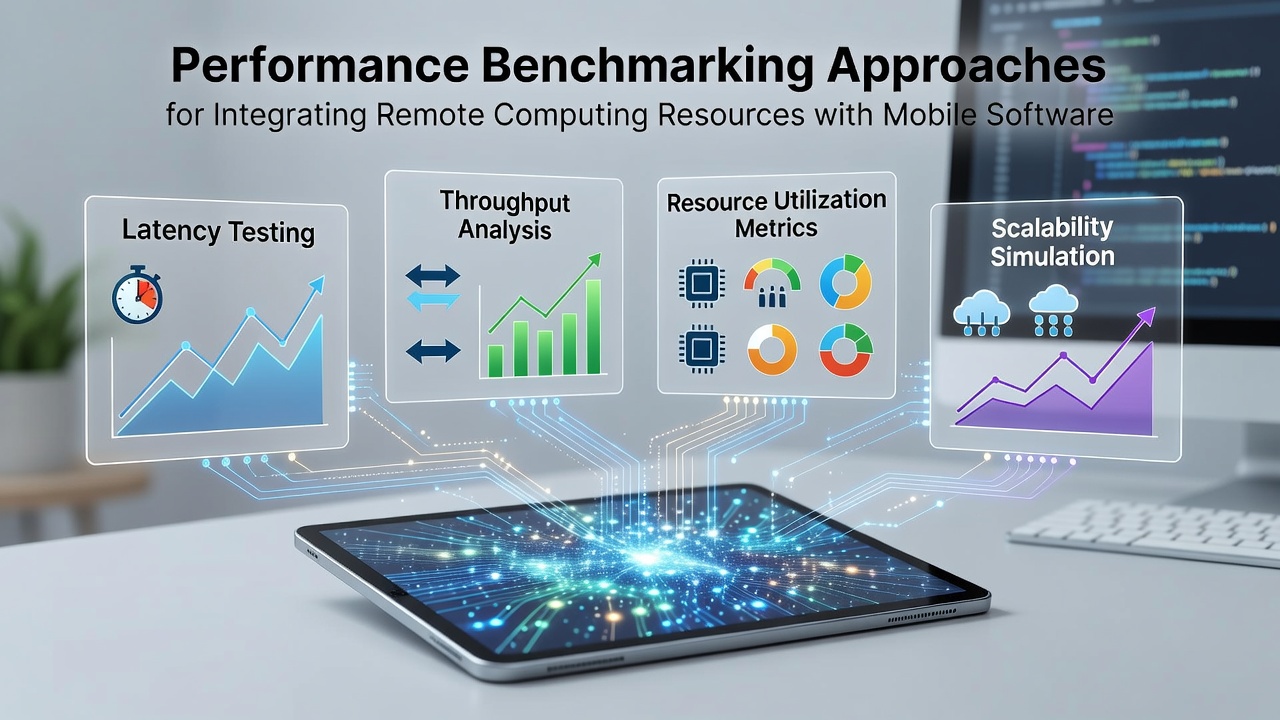
Throughput measurements capture the volume of data processed per second once remote resources handle intensive tasks, whereas latency figures track round-trip times for requests routed to cloud instances. Energy profiling tools integrated into mobile operating systems provide granular readings of power draw during offloading operations, and studies show that accurate energy benchmarks prevent unexpected drain issues that surface only after public release. As of June 2026, updated mobile SDKs from major vendors include enhanced APIs that simplify collection of these metrics without requiring custom instrumentation.
Teams often segment benchmarks into phases that isolate network transfer costs from remote computation time, which helps pinpoint whether performance gains stem from faster processing or from reduced local workload. Data pattern analysis further refines these measurements by identifying peak usage windows when remote resource allocation should scale dynamically.
Integration Challenges Addressed Through Benchmarking
Variable network conditions create unpredictable performance when mobile applications depend on remote resources, yet benchmarking cycles that incorporate geographic diversity and time-of-day variations expose these fluctuations early. Security overhead introduced by encryption layers between devices and remote endpoints adds measurable latency, and systematic testing reveals optimal cipher suites that balance protection with speed. Reports from the Australian Department of Industry, Science and Resources highlight how government-funded projects used benchmarking to maintain compliance while preserving application responsiveness.
Resource contention on shared cloud instances can degrade results if benchmarks run without accounting for multi-tenant environments, and experts recommend isolated test clusters that mirror production conditions more closely. Those who have studied this process find that iterative benchmarking across development sprints catches integration drift before it compounds into user-facing problems.
Case Examples from Recent Projects
One logistics application integrated remote image recognition services with on-device interfaces, and repeated benchmarking runs demonstrated that splitting workloads reduced average response time from 1.8 seconds to 0.9 seconds under typical 4G conditions. Another project involving collaborative editing software measured synchronization delays when remote compute handled conflict resolution, revealing that selective offloading cut data transfer volumes by 40 percent. Academic papers published through Canadian research networks describe similar patterns where benchmarking guided architecture decisions that scaled across thousands of concurrent users.
These examples illustrate how benchmark data directly informs code-level adjustments rather than serving only as post-deployment validation. Teams that embed benchmarking checkpoints at each integration milestone maintain tighter control over performance targets throughout the project lifecycle.
Emerging Practices and Tooling Trends
Continuous benchmarking pipelines now integrate with CI/CD systems, allowing performance regressions to surface automatically when remote resource configurations change. Machine learning models trained on historical benchmark datasets predict how new mobile features will interact with remote infrastructure before full implementation begins. Industry organizations such as the Cloud Native Computing Foundation publish guidelines that standardize these predictive techniques across different cloud providers.
Cross-platform testing frameworks extend coverage to both iOS and Android environments simultaneously, reducing the duplication of effort that previously limited benchmark scope. Figures from recent industry surveys reveal that organizations adopting automated benchmarking pipelines report 30 percent fewer performance-related support tickets after launch.
Conclusion
Performance benchmarking approaches continue to evolve alongside advances in remote computing and mobile platforms, providing teams with concrete data to guide integration decisions. Structured measurement of latency, energy use, and throughput under controlled and realistic conditions ensures that mobile software projects achieve reliable results when leveraging distributed resources. Organizations that embed these practices throughout development maintain consistent application quality across changing network landscapes and hardware generations.