Consumer Behavior Shifts Reshape Priorities in Secure App Creation and Marketing Analytics
Written by Otto Walter · Jul 13, 2026
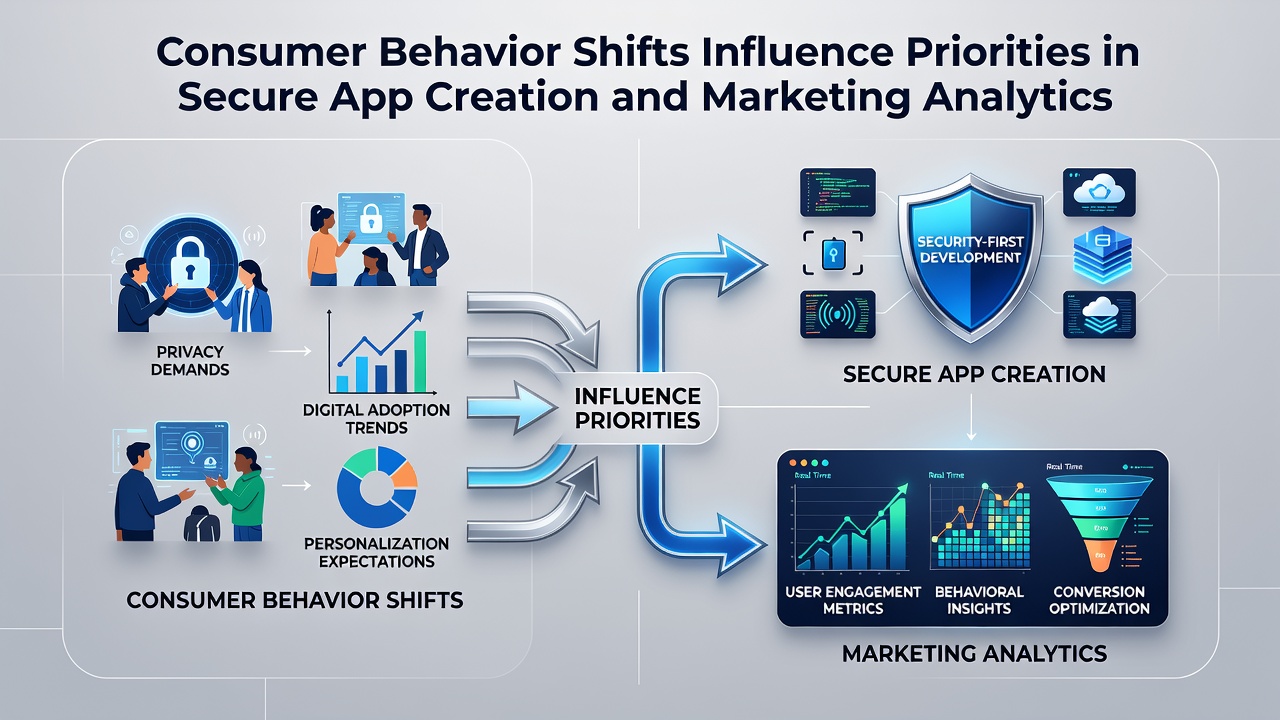
Consumer Behavior Shifts Reshape Priorities in Secure App Creation and Marketing Analytics
Consumer preferences have moved toward greater emphasis on data privacy and seamless digital experiences, and this evolution has prompted developers to adjust how they build secure applications while refining their approaches to marketing analytics. Research from multiple regions shows that users now favor platforms with transparent security protocols, which in turn influences resource distribution during development cycles. Data collected through mid-2026 reveals consistent patterns where mobile shoppers demand faster load times alongside stronger encryption standards, leading teams to integrate these requirements from the initial design phase rather than as add-ons.
Tracking Shifts in User Expectations
Analysts have documented rising concerns around personal information handling since early 2025, with figures from Statistics Canada indicating that over 70 percent of online consumers review privacy policies before installing new applications. These patterns extend across age groups and regions, prompting app creators to prioritize features such as end-to-end encryption and minimal data collection. Marketing analytics platforms have adapted by incorporating consent tracking tools that comply with varying international regulations, allowing companies to segment audiences based on privacy preferences without compromising compliance.
Developers often start by mapping user journeys to identify friction points related to security prompts, then layer in analytics that monitor engagement metrics while respecting those boundaries. The result appears in updated frameworks where secure coding practices align directly with data visualization needs, creating unified workflows that reduce duplication across teams.
Adjustments in Secure App Development Processes
Teams working on retail and service applications have reallocated budgets toward advanced authentication methods, including biometric options and behavioral analysis, because consumer trust metrics show direct correlation with retention rates. According to reports from the Australian Competition and Consumer Commission, applications that implement proactive threat detection see measurable improvements in user retention during peak shopping periods. This data guides decisions on when to deploy updates, ensuring security enhancements coincide with marketing campaigns that highlight those protections.
Integration of cloud-based monitoring systems allows real-time adjustments, where analytics feed insights back into code repositories. Observers note that this closed-loop approach helps maintain performance while addressing vulnerabilities before widespread user impact occurs. In July 2026, several major platforms rolled out patches informed by aggregated behavioral data, demonstrating how these priorities translate into practical timelines.

Refinements in Marketing Analytics Practices
Analytics specialists now focus on datasets that exclude sensitive identifiers unless explicit consent exists, which aligns with broader consumer demands for control over personal details. This adjustment supports targeted campaigns that feel relevant without crossing privacy thresholds, and it requires new validation steps during data aggregation. Tools that previously tracked every interaction have evolved to emphasize aggregate trends, helping marketers identify high-value segments while maintaining compliance across jurisdictions.
Case examples from European retail applications illustrate how A/B testing now incorporates security perception surveys alongside conversion rates. Results feed into iterative improvements where both development and analytics teams review outcomes together. Such collaboration reduces the time between identifying a behavior shift and implementing corresponding changes in both app architecture and promotional strategies.
Resource Allocation Patterns Emerging in 2026
Organizations have begun balancing investments between interface refinements and backend safeguards based on quarterly consumer surveys. Data indicates that applications emphasizing both areas experience steadier growth compared to those concentrating on one aspect alone. This balanced allocation draws from cross-functional metrics that combine security incident logs with engagement analytics, creating clearer pictures of overall platform health.
Training programs for developers increasingly include modules on interpreting marketing data, while analysts learn basic secure coding principles. These shared skill sets streamline communication and accelerate decision-making when new consumer trends surface. Patterns observed through July 2026 suggest continued movement toward these integrated models across mid-sized enterprises and larger platforms alike.
Conclusion
The interplay between evolving consumer habits and technical priorities continues to shape how applications are constructed and promoted. Evidence from regulatory bodies and research institutions points to sustained focus on privacy-integrated analytics as a core element of future development roadmaps. Teams that monitor these signals closely position themselves to respond effectively as expectations keep changing.