Charting New Paths: Tech Consulting's Impact on Blending Digital Marketing with Robust IT Support Frameworks
Written by Yara Keller · May 18, 2026
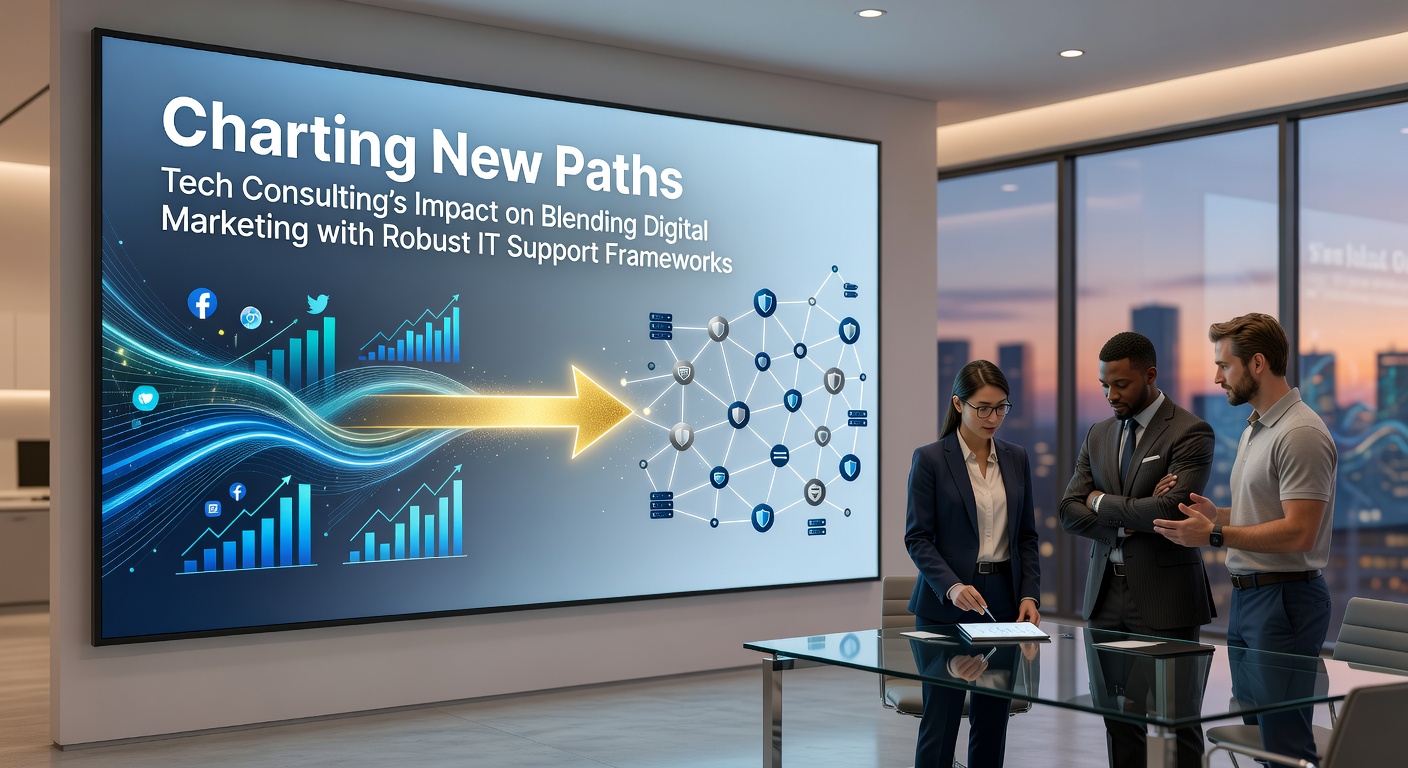
Charting New Paths: Tech Consulting's Impact on Blending Digital Marketing with Robust IT Support Frameworks
Tech consulting firms have expanded their scope in recent years to address the growing need for seamless connections between digital marketing initiatives and underlying IT support structures, and this shift reflects broader changes in how organizations manage technology ecosystems. Companies now rely on consultants to align marketing platforms with secure, scalable IT frameworks that handle data flows, customer interactions, and system maintenance without disruption.
Defining the Integration Landscape
Digital marketing operations depend on tools that generate vast amounts of user data, campaign metrics, and engagement analytics, while IT support frameworks ensure these tools remain operational through monitoring, updates, and security protocols. Tech consultants bridge these areas by assessing existing systems, identifying gaps in compatibility, and recommending architectures that support both real-time marketing adjustments and long-term infrastructure stability. Research from industry analyses shows that businesses adopting such integrated approaches often report improved uptime and reduced response times for technical issues tied to marketing campaigns.
Core Components of Effective Blending
Consultants typically begin with audits of current marketing stacks and IT environments, mapping how elements like customer relationship management software interact with network resources and cloud services. They then design frameworks that incorporate automated monitoring for marketing automation tools alongside traditional IT support measures such as patch management and backup procedures. This process allows teams to maintain campaign continuity even during infrastructure scaling events, and data from multiple studies indicate that organizations following these methods experience fewer instances of downtime affecting promotional activities.
One approach involves layering marketing-specific APIs onto robust IT foundations that prioritize redundancy and compliance standards. Consultants guide clients through selecting platforms that support both targeted advertising algorithms and enterprise-grade security controls, creating environments where data privacy regulations integrate directly with audience segmentation processes. In May 2026, reports from the Australian Department of Industry, Science and Resources highlighted similar trends in digital economy growth, noting increased adoption of hybrid models that combine marketing agility with IT resilience across sectors.
Practical Implementation Strategies
Implementation often starts with phased rollouts where consultants test marketing workflows in controlled IT environments before full deployment. They establish protocols for handling spikes in website traffic from campaigns while maintaining consistent support through predictive analytics that flag potential system strains early. This method reduces the likelihood of marketing efforts being hampered by technical bottlenecks, and figures from various trade reports reveal measurable gains in campaign delivery rates for firms that employ these strategies.

Training programs form another key element, as consultants equip marketing personnel with basic IT troubleshooting skills while educating support staff on the nuances of digital campaign requirements. Workshops cover topics from interpreting analytics dashboards to recognizing signs of infrastructure overload during peak promotion periods. Such cross-functional education fosters smoother operations overall, and observers note that teams with this combined knowledge tend to resolve issues faster without escalating every minor glitch.
Examples from Diverse Sectors
Retail organizations have applied these blended frameworks to synchronize online advertising with backend inventory systems, ensuring that promotional pushes align with real-time stock updates managed through IT-supported databases. Financial services firms, meanwhile, use consultant-led projects to merge compliance-driven IT monitoring with customer outreach campaigns that rely on secure data exchanges. In each case, the emphasis remains on creating adaptable systems rather than isolated solutions, and evidence from academic reviews at institutions like the University of Toronto's Rotman School of Management supports the effectiveness of these cross-domain integrations in maintaining operational consistency.
Measuring Outcomes and Adjusting Frameworks
Performance tracking relies on combined metrics that assess both marketing return on investment and IT system reliability indicators such as mean time to recovery. Consultants help establish dashboards that display these data points side by side, enabling quick adjustments when marketing initiatives strain support resources. This dual-focus evaluation provides clearer pictures of overall efficiency, and ongoing refinements based on collected information allow frameworks to evolve alongside changing business priorities.
External partnerships with vendors often supplement internal efforts, as consultants coordinate between marketing technology providers and IT hardware specialists to resolve compatibility concerns before they impact live operations. Regular reviews of these collaborations ensure that updates to one area do not inadvertently affect the other, maintaining balance across the entire setup.
Conclusion
Tech consulting continues to shape how organizations connect digital marketing activities with durable IT support systems through structured assessments, targeted implementations, and continuous refinements. The approaches described draw from established practices that prioritize compatibility and responsiveness, resulting in environments where campaigns proceed reliably alongside maintained technical foundations. As industries advance, these integrated models provide pathways for sustained operational alignment without reliance on fragmented solutions.